Healthcare construction safety training
“Protecting those who protect patients.”
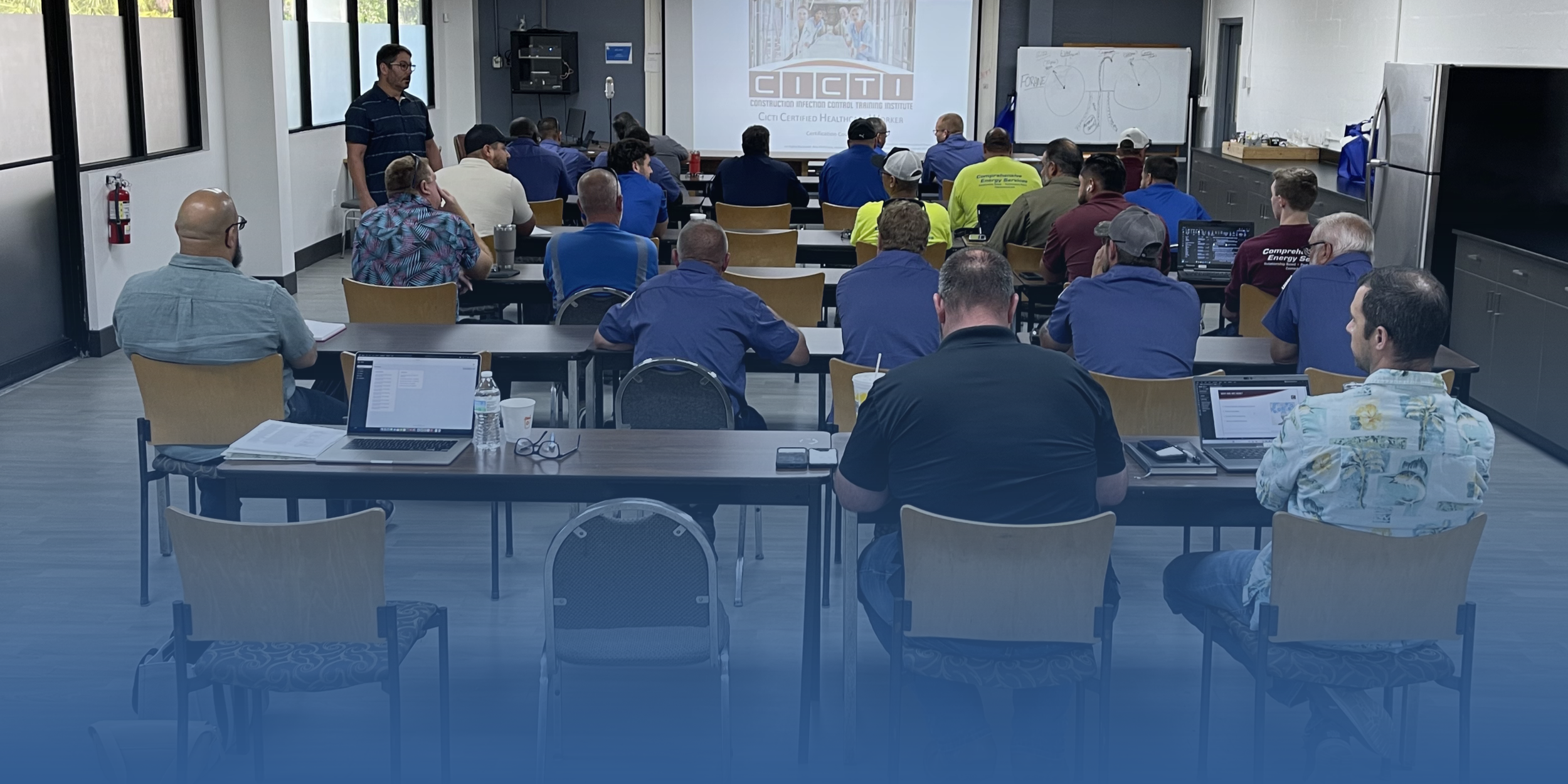
Safety and infection prevention training is essential in healthcare construction Work in and around occupied clinical areas where dust, debris, moisture, and disruptions to ventilation can quickly compromise patient care.
Professional training helps your crew recognize how routine construction activities can create infection risks (for example, airborne particulates that may carry pathogens), and it standardizes controls such as containment, negative pressure, pathway management, cleaning, and coordination with facility infection prevention and clinical teams. It also reinforces core jobsite safety practices—hazard recognition, PPE, and safe work methods—reducing incidents that can delay critical hospital operations.
Our training benefits everyone: patients (especially immunocompromised individuals) by lowering healthcare-associated infection risk; clinicians and hospital staff by maintaining safe, functional spaces; contractors and trades by preventing exposures, injuries, and rework; and owners/facilities by protecting compliance, reputation, schedules, and costs.
Our training courses meet the highest current industry standards while providing a personalized on-site experience to increase the opportunity for learning and retention.
Professional on-site training for your team
ICRA Courses

-
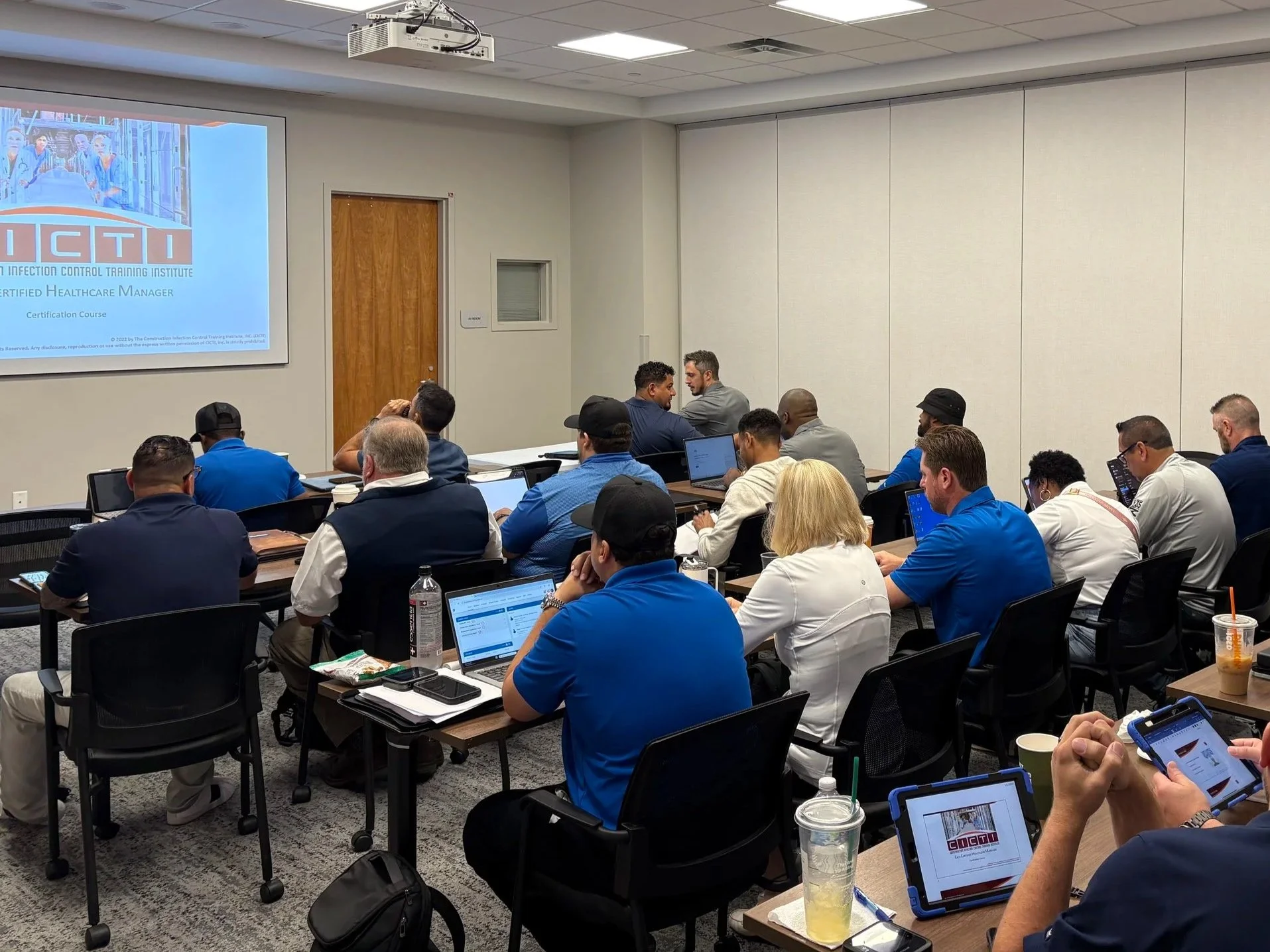
Our most popular course, the Certified Healthcare Manager Program is intended for Project Management, Superintendents, Estimators and those directly involved with ICRA implementation.
*Our most popular course.
-
This program is intended to train the boots on the ground - where the real risks can be effectively managed or completely ignored.
-
This course was created based upon numerous requests from healthcare organizations to help them address ICRA specifically for routine maintenance, break/fix activities and small scale in-house modifications.
-
This course provides education in the fundamentals of infection control components and the differences between reactive contaminate control and proactive strategies to prevent the likelihood of contaminant release.
OSHA Courses
-
A foundational, safety program designed for entry-level workers to lean about hazard recognition, avoidance, abatement, and prevention.
-
An in-depth, comprehensive safety program designed for supervisors and workers with safety responsibilities, providing advanced knowledge on hazard recognition, avoidance, abatement, and prevention.
It covers OSHA standards, worker rights, and employer responsibilities to foster a safer workplace culture.